ServicesGutters
Gutter Installation Across El Mirage
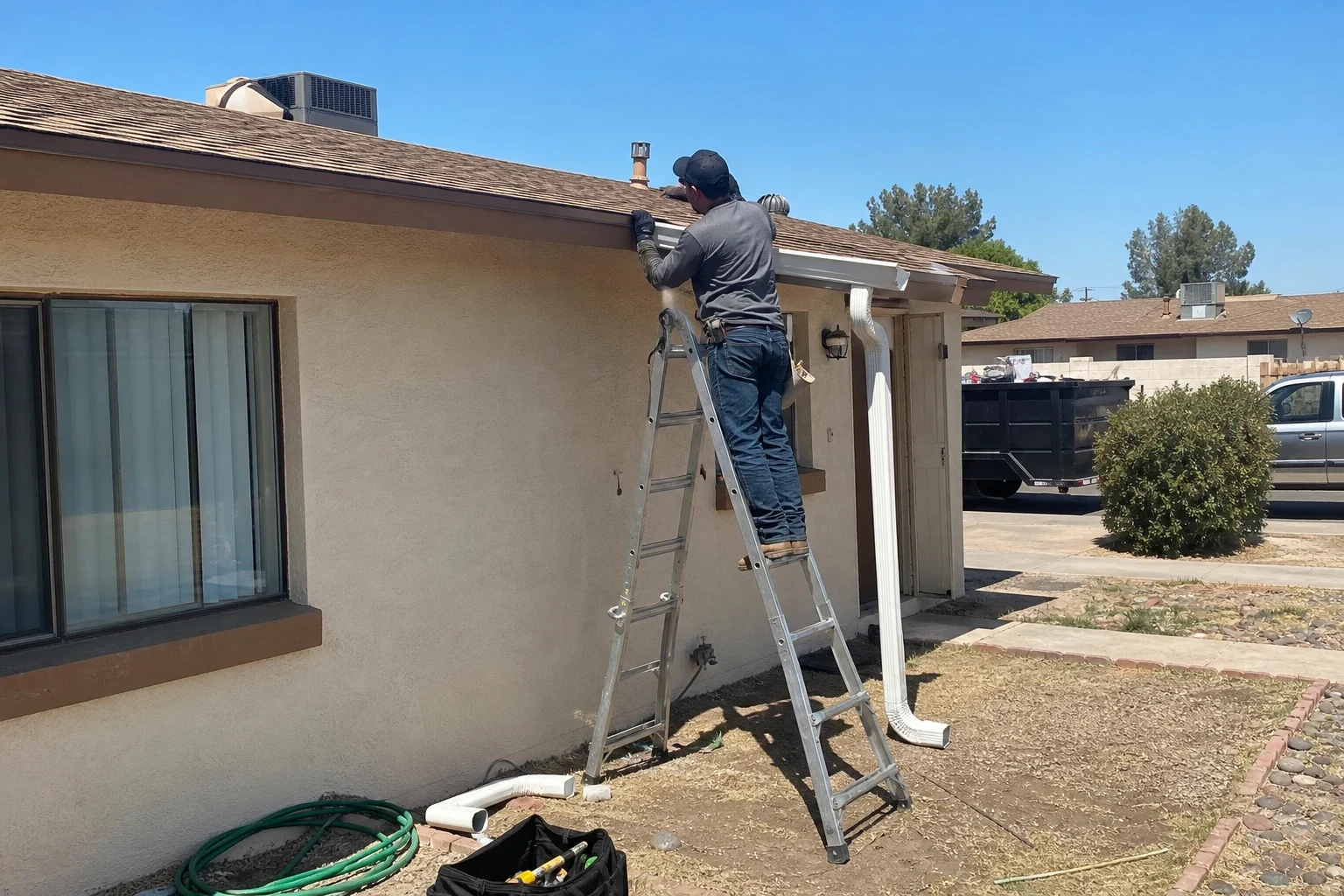
Our roofs sit dry for months, and then one monsoon cell can dump an inch of rain in thirty minutes. We install one-piece gutters and downspouts built for those bursts, carrying water off the roof calmly and setting it down far from your walls.
What Gutters Do on a Desert Home
Plenty of houses in El Mirage were built without gutters, or with a few short runs over the doors. That works until the summer storms arrive. Water sheets off concrete tile, splashes back onto stucco, carves channels through decorative rock and soaks the soil along the slab. West Valley clay swells when wet and shrinks as it dries, and that movement is hard on foundations, walkways and patio slabs.
A well-planned system collects that water at the eaves and sends it where you want it: to a drain, a gravel swale or the base of a shade tree. It also keeps fascia boards and soffits from wetting and drying over and over. Rotted fascia and loose soffit vents leave gaps where hot attic air and dust move in, and keeping that wood sound is one modest way gutters help an attic stay tight and the house stay comfortable.
We handle gutters as part of the roof, not an afterthought. If we spot a cracked tile, a lifted flashing or a soft section of decking while we're on the eaves, we'll show you a photo and explain whether it needs roof repair now or can wait for your next roof inspection.
What Our Gutter Work Includes
One-piece runs formed on site
We roll each gutter from a coil of painted aluminum at your house, cut to the exact length of the eave. No seams along the run means no sealant joints to bake, shrink and drip after a few Arizona summers.
Sizing for real storm volume
We measure roof area and pitch on each side of the house, then choose between 5-inch and 6-inch profiles and standard or oversized downspouts. Tile roofs shed water fast, so we often go larger than a builder would.
Hangers that suit tile roofs
Hidden hangers are fastened into the fascia at close spacing, never pried under concrete tile. We set the gutter line so the tile overhang drips into the trough instead of over it.
Scuppers and flat-roof sections
Many homes here have a flat roof behind a parapet. We fit collector boxes under the scuppers and run downspouts to grade so water stops staining the stucco below.
Discharge planned at ground level
Downspouts end in extensions, splash blocks or underground lines that carry water past the foundation. We'll suggest routing toward trees or planting beds where that makes sense for your yard.
Finish matched to your trim
Gutters come in a range of factory colors that hold up to strong sun. We match fascia or stucco so the system reads as part of the house.
Signs Your Home Needs Gutter Work
- Stains or splash marks on stucco
- Dark streaks under the eaves or a band of muddy splatter near the ground show where roof water is landing. Over time it wears the finish coat and lets moisture into the wall.
- Washed-out rock and trenches
- If each storm leaves a line of bare soil along the drip edge, water is falling straight off the roof. That's the same water soaking the soil next to your slab.
- Gutters overflowing in a downpour
- Water spilling over the front lip usually means the gutter or downspout is too small, or packed with dust and leaves. Sometimes it is pitched the wrong way.
- Peeling or soft fascia
- Paint that blisters, or wood that gives under a thumb, points to repeated wetting. Catching it early keeps the repair to a board or two.
- Sagging or leaking joints
- Older sectional gutters often pull away from the house and drip at every seam. Patching them tends to buy a season at most.
How a Gutter Day Runs
- 1
Measure and walk the eaves
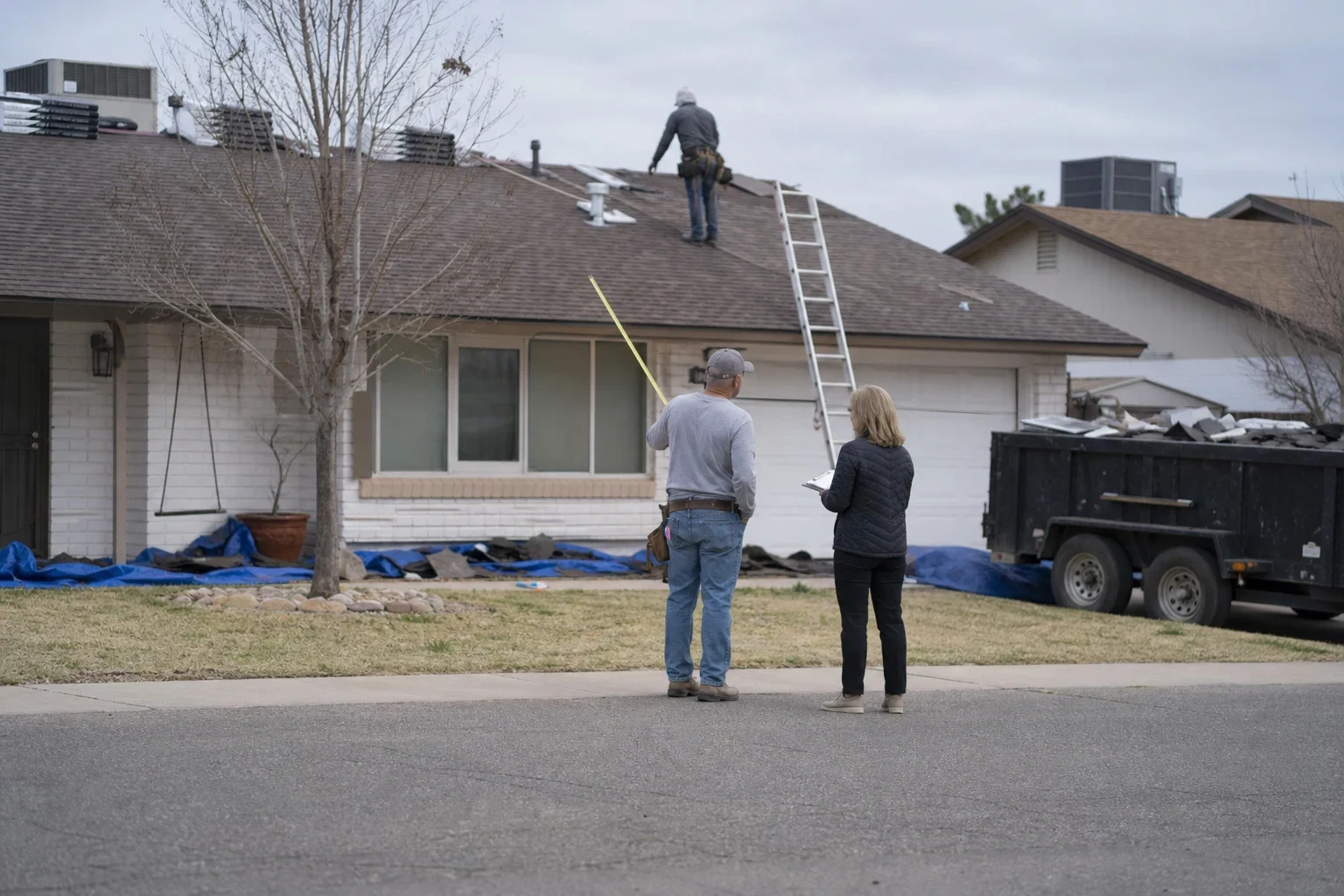
We look at every roof edge, the fascia condition, the scuppers and where water lands now. You get a written estimate that lists runs, sizes, downspouts and any fascia repair separately.
- 2
Protect and remove
We lay drop cloths over plants and patios, then take down old gutters and pull their fasteners. Any rotted fascia is replaced and primed before new work goes up.
- 3
Form, hang and pitch
The gutter machine runs in your driveway. Each run is hung with a steady slope toward its outlet, checked with a level, and sealed only at end caps and outlets.
- 4
Test and clean up
We run a hose through the system to confirm it drains and that downspouts discharge where planned. Then we gather scraps and screws and walk the yard with you before we leave.
What Shapes the Price of Gutters
Gutters are priced by the run, but the house decides most of the cost. Two homes of the same square footage can differ a lot depending on roof shape and what's waiting behind the old gutters. Your estimate breaks each item out so you can see where the money goes.
- Linear footage and corners
- Total length matters, and so do the number of inside and outside miters. A hip roof with many short sections takes more labor than a simple gable.
- Gutter and downspout size
- Six-inch gutters and oversized downspouts use more material but move far more water in a monsoon cell.
- Fascia condition
- Sound fascia goes straight to installation. Rotted boards need to be replaced and painted first, which we price per board.
- Two-story access and scuppers
- Second-story eaves need more ladder and setup time. Scupper boxes and long downspout drops on flat-roof sections add parts and labor.
- Where the water goes
- Simple splash blocks cost little. Underground drain lines or long extensions across a yard add trenching and fittings.
Common Gutter Questions
- Do desert homes actually need gutters?
- Some do and some don't, and we'll be straight with you. Deep eaves, a lot that drains away and healthy ground below may mean a few short runs over entries are enough. If storms are marking your stucco or pulling soil away from the slab, a full system pays off.
- Can gutters go on a concrete tile roof?
- They can. Our hangers fasten to the fascia, not beneath the tile, and we set the gutter so water dripping off the tile edge falls inside it. No tiles have to be lifted.
- How often do gutters here need cleaning?
- For most houses, twice a year is enough: before the monsoons and again in late fall. Dust storms leave grit in the trough, and mesquite and palo verde shed small leaves and pods. Homes with trees overhead may need one more check.
- Are gutter guards worth it here?
- It depends. Fine mesh guards stop leaves and pods, but dust can build up on top and need brushing away. We'll give you an honest read on whether your trees and roof justify them.
- Can gutters be installed along with a new roof?
- That timing often works best. With the roof being replaced, the fascia is open and the drip edge is fresh, so gutters fit neatly to both. We also install gutters as a standalone job for homes in El Mirage, Surprise, Youngtown and Peoria.
Get Ready for the Next Monsoon
We'll measure your eaves, show you where water is landing now and give you a written estimate with each run listed. Most homes take a single day to fit.