ServicesRoof replacement
Roof Replacement in El Mirage, Built for Desert Summers
When a roof has reached the end of its working life, we replace it from the deck up. New underlayment, careful flashing and an attic that can breathe. The goal is a roof that keeps water out during monsoon season and keeps your upstairs rooms cooler from June to September.
When Replacement Is the Right Call
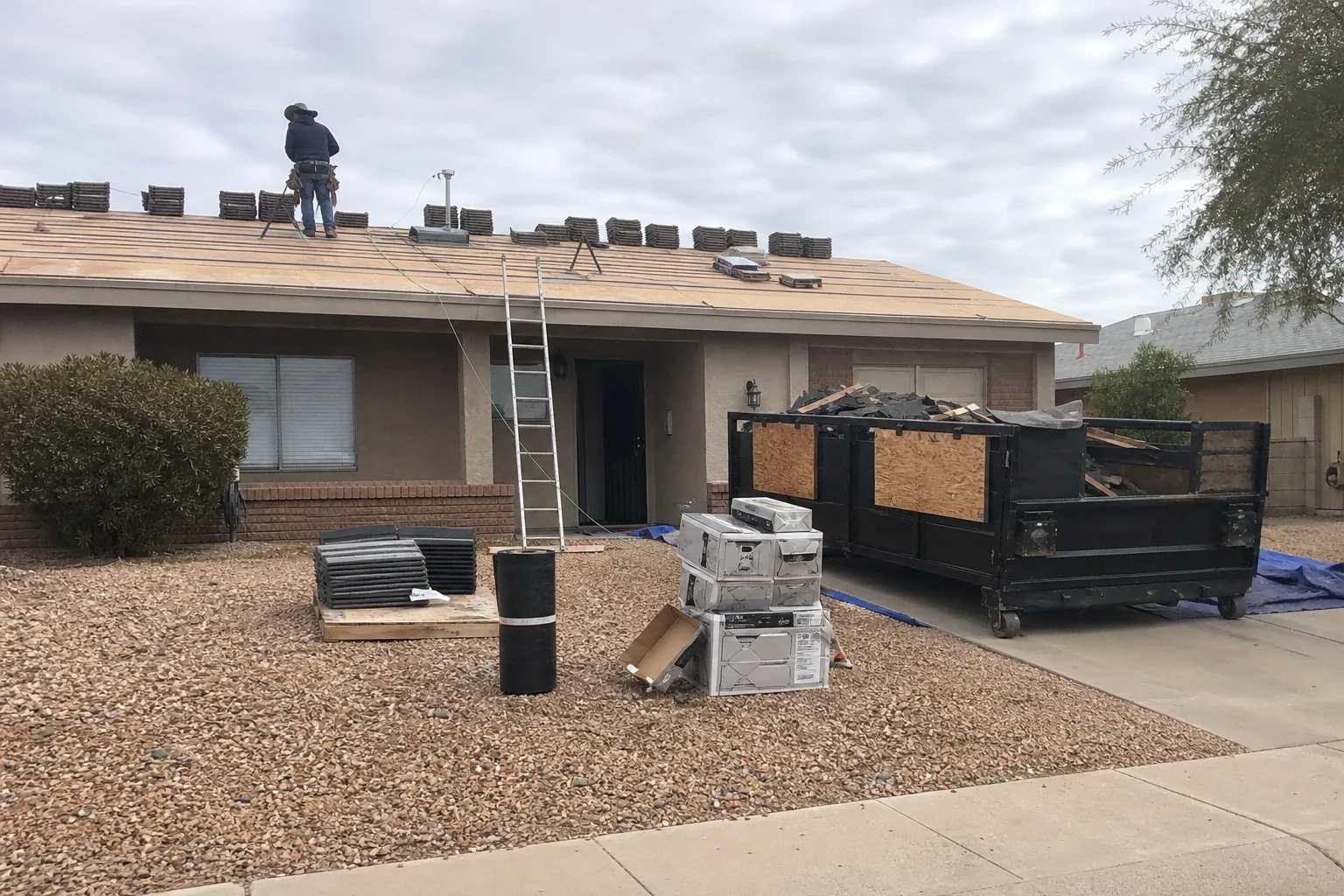
Many homes around El Mirage, Surprise and Youngtown have concrete tile roofs. The tile itself often outlasts the house. The underlayment beneath it does not. After two decades of attic temperatures well above 140 degrees, older felt turns brittle, cracks at the laps and stops shedding the water that slips past the tile. At that point patching one valley at a time costs more over a few years than doing the whole field properly.
Asphalt shingle roofs age faster here than in milder climates. UV and heat bake the oils out, granules wash into the gutters and the mat starts to curl. Low-slope sections over patios and additions see their coatings chalk and split.
We give you an honest answer on whether you need a full replacement, a tile lift and relay with new underlayment, or simply a roof repair. If a few more years of service are realistic, we say so.
What Comes With a New Roof
Stripped to the sheathing
Old roofing and underlayment come off so the sheathing is in plain view. Any decking that is soft or separating gets replaced, and we take photos so you see exactly what was there.
Underlayment made for heat
We put down synthetic or high-temperature underlayment rated for desert conditions. It lasts much longer than old felt and gives the tile or shingle a reliable backup layer.
Finishes that reflect sun
Pale tile, cool-rated shingle and reflective coatings on flatter sections bounce more heat skyward rather than into the attic. You see samples, and we explain how each color and profile performs on a slope facing west.
Intake and exhaust in balance
We measure how much air comes in versus how much goes out and fix any shortfall. When hot air can escape at the ridge, the air conditioner gets a bit more rest on summer afternoons.
New metal at every opening
Valleys, wall lines, chimneys, skylights and pipe jacks receive new flashing and fresh sealant, fitted by hand. Most leaks start at these points, so we work on them slowly.
Permit, inspections and cleanup
We handle the reroof permit, book the inspections and run a magnet over the yard and driveway once the work is done.
Signs Your Roof Is Due
- Repeat leaks after monsoon storms
- If water shows up in a new spot each summer, the underlayment is likely failing across the roof, not just in one place.
- Cracked or slipped tiles in many areas
- A few broken tiles are a repair. Widespread slipping or cracking usually means fasteners and battens are worn too.
- Bald or curling shingles
- Heavy granule loss leaves the asphalt exposed to sun. Curling edges catch wind and let rain under the shingle.
- An attic that stays hot into the night
- Poor venting and a dark, heat-soaked roof can keep an attic hot hours after sunset. That heat works its way into the ceilings and onto your power bill.
- Stains or sagging on ceilings
- Discolored drywall or a soft spot overhead points to long-term moisture reaching the deck. A roof inspection will tell us how far it has spread.
How the Work Runs
- 1
Inspection and written estimate
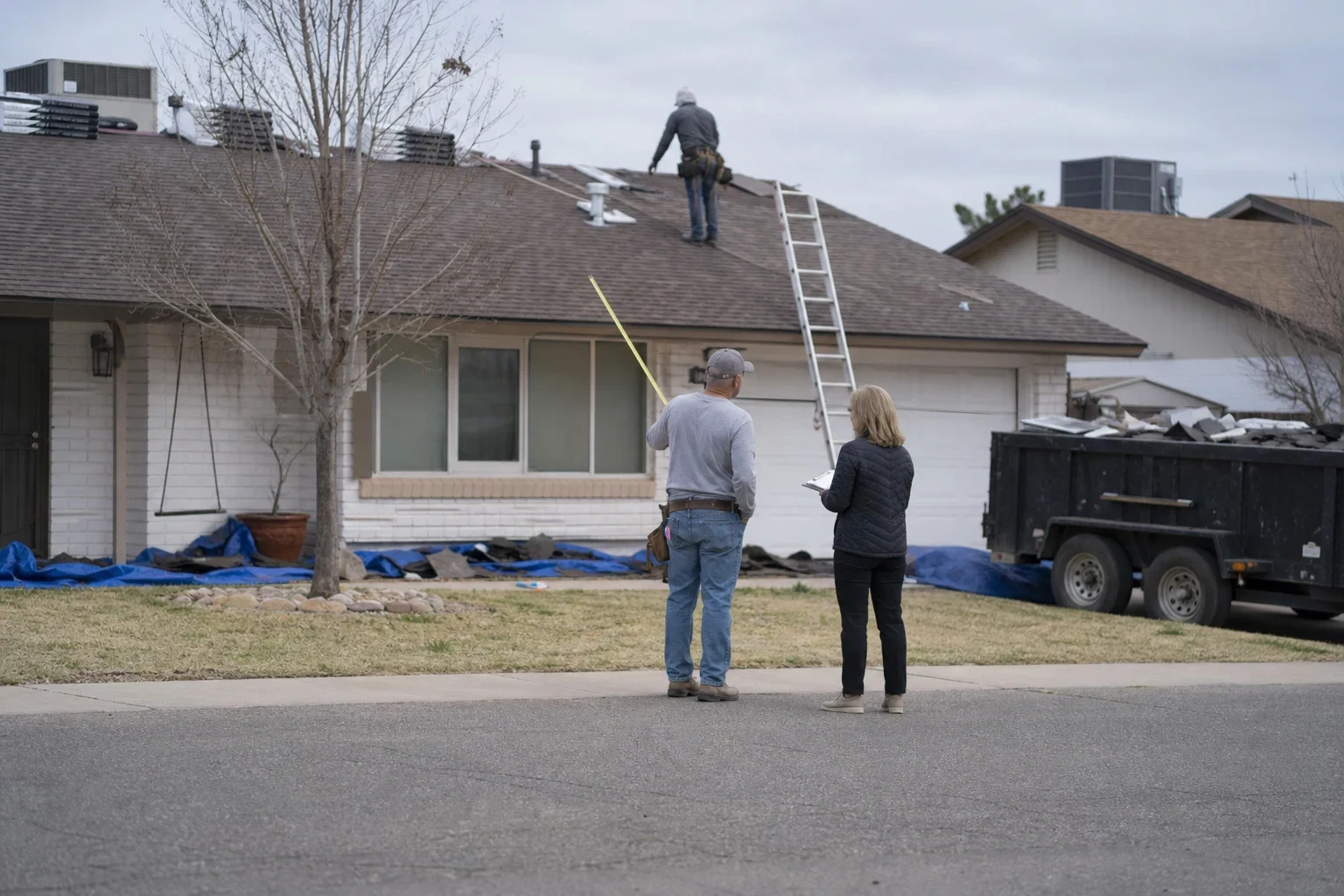
We walk the roof, look in the attic and take photos. You receive a line-item estimate that lists materials, decking allowances and venting changes separately.
- 2
Choosing materials together
We go over tile, shingle or coating options, colors and their heat performance. You decide with the samples in hand, not from a brochure.
- 3
Preparing the property
We cover plants, protect AC units and pool equipment, and set tarps where debris will fall. In summer we start early to keep the crew and your roof out of the worst heat.
- 4
Tear-off and installation
Most homes are dried in the same day the old roof comes off. Then come underlayment, flashing, venting and the finished roofing.
- 5
Final inspection and walkthrough
After the city inspection, we walk the property with you, share the photo record and leave the yard as tidy as we found it.
What Moves the Cost
Every roof is priced from what we measure and find, not a square-foot guess. The estimate breaks out each part so you can see where the money goes. These are the main factors.
- Roof size and pitch
- More squares mean more material and labor. Steeper slopes need extra safety setup and move more slowly.
- Material choice
- Reusing sound concrete tile with new underlayment can be economical. New tile, cool-rated shingle or foam on a low-slope section each carry different costs.
- Deck condition
- Damaged sheathing is only visible once the old roof is off. We list a per-sheet price ahead of time so there are no surprises.
- Ventilation and extras
- Adding ridge or off-ridge vents, replacing skylights or upgrading flashing adds cost, but often pays back in comfort and lower cooling demand.
Roof Replacement Questions
- Can you reuse my existing concrete tiles?
- Often, yes. If most tiles are sound, we lift them, install new underlayment and battens, then relay them and replace any broken pieces. We match replacement tiles as closely as the current profiles allow.
- Will a new roof really lower my cooling costs?
- It can help, especially if your current attic is poorly vented or the roof is dark. Reflective materials and balanced airflow reduce the heat entering the attic. How much you save depends on your insulation, ductwork and habits, so we won't promise a number.
- How long will my home be without a roof?
- For most homes, the deck is covered with underlayment the same day the old roof comes off. The finished roofing goes on over the next few days, and the house stays protected throughout.
- Do I need a permit for a reroof here?
- Cities across the West Valley, including El Mirage, Glendale and Peoria, generally require a permit for roof replacement. We apply for it, schedule the inspections and keep the paperwork for your records.
- Is summer a bad time to replace a roof?
- Summer work is common here. We start at first light and plan around monsoon forecasts. Many homeowners prefer spring or fall for comfort, and we can schedule accordingly.
Plan Your New Roof With Us
We'll inspect your roof, show you photos and talk through materials and venting before anything is decided. We serve El Mirage, Litchfield Park, Tolleson and nearby towns.