ServicesRoof inspection
El Mirage Roof Inspections That Include the Attic
We get on the roof, climb into the attic and take photos of everything we see. You receive a plain report on the tile or shingles, the underlayment under them, the flashing and how well your attic lets heat out, with an honest split between what needs work now and what can wait.
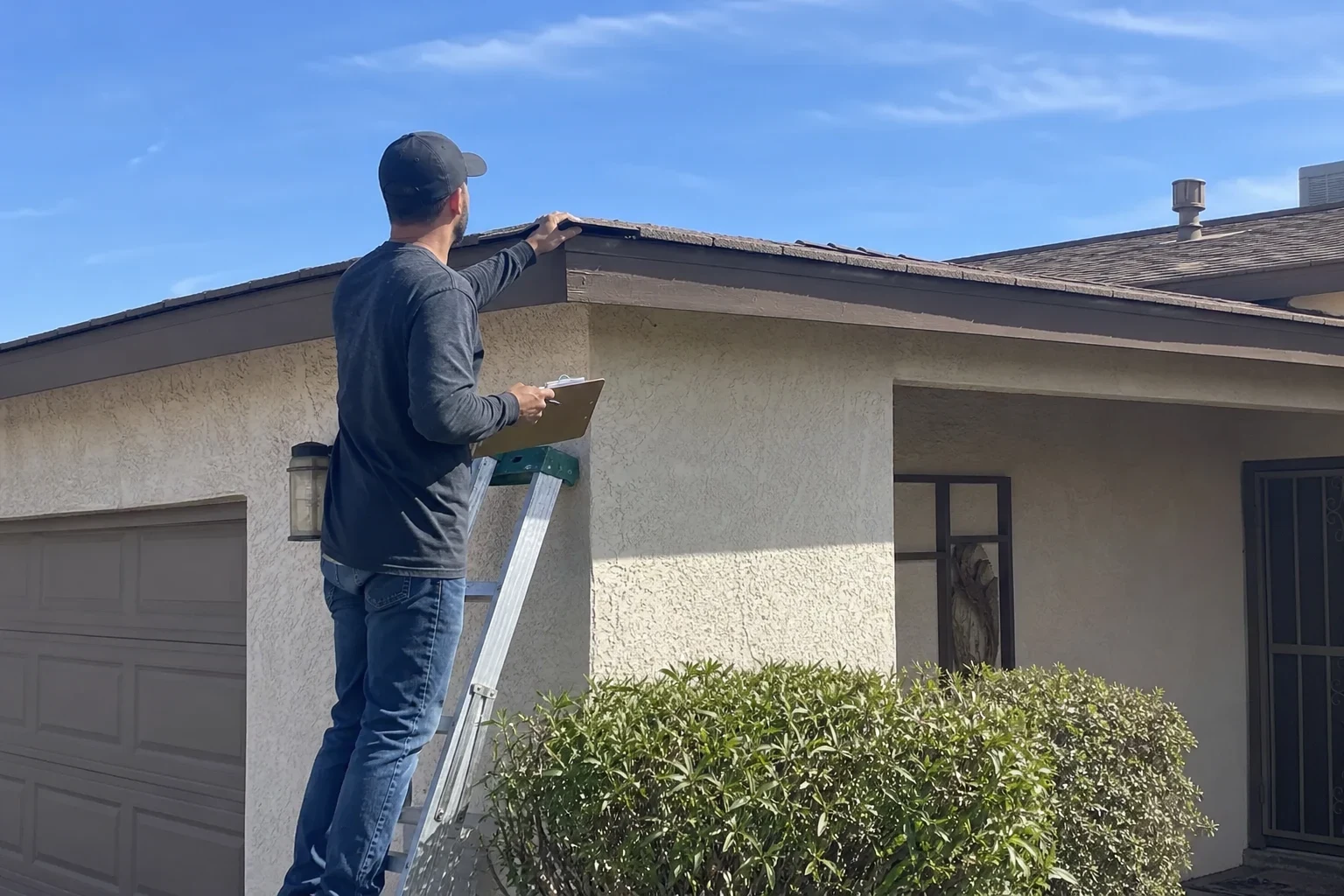
What You Learn From an Inspection
Across El Mirage and the West Valley, most roofs are concrete tile laid over felt or synthetic underlayment. The tile can look good for decades, but the waterproofing happens underneath, and long years of desert heat can leave that layer brittle, split at the overlaps or worn thin in the valleys well before anything is visible from the street.
It makes sense to book one before buying or selling, after a monsoon storm, when a ceiling stain appears, or when upstairs rooms stay hot and cooling bills keep rising. People are often surprised by that last one. A clogged soffit, a flattened vent or thin insulation can trap heat in the attic late into the night, and your air conditioner bears the cost.
We treat surface, underlayment, flashing, ventilation and attic as one connected system. When we finish, you know where the roof stands and what it needs, if anything.
What the Inspection Covers
The outer surface
We look for broken, cracked or shifted tile, worn or curled shingles, and on flat sections, blistered coating or bare foam. We also mark tile that earlier service visits broke underfoot.
The underlayment, where visible
In usual trouble spots like valleys and low-slope runs, we raise a few tiles to see the felt underneath. Torn, brittle or sun-damaged underlayment is the top reason older tile roofs begin to leak.
Flashing and roof openings
We check pipe boots, chimney and wall flashing, skylight curbs and the metal where roof meets stucco. Rubber boots dry out in our sun, and replacing them is common and inexpensive.
Attic airflow and heat
Inside the attic we check intake and exhaust vents, look for blocked soffits and record insulation depth along with any daylight or water marks. Weak airflow up here often explains a warm upstairs.
Gutters and runoff
If the house has gutters, we make sure the downspouts carry water clear of the stucco and foundation. Our gutters page goes into that work further.
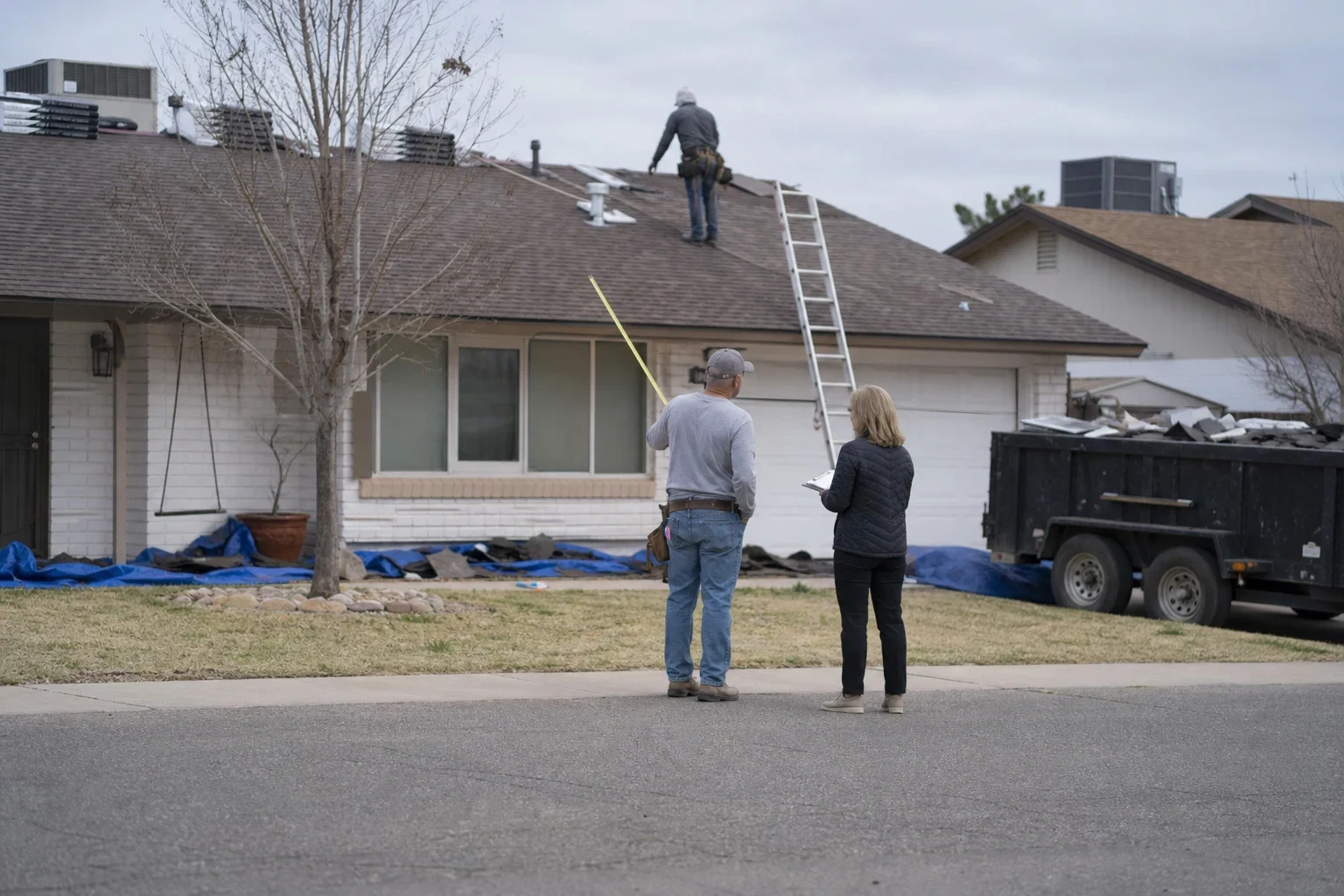
Signs It Is Time for an Inspection
- Stains on a ceiling or wall
- Even a faint ring after a monsoon storm means water reached the drywall. The source is often several feet uphill from the stain.
- Upstairs rooms that will not cool
- If the thermostat struggles every summer afternoon, attic heat may be the cause. Ventilation and insulation are worth a look before anything else.
- Broken or shifted tiles
- Wind, a dropped satellite dish or a past repair can leave gaps. Exposed underlayment ages fast in direct sun.
- A roof around twenty years old
- Many original tile roofs in the area are reaching the age where the underlayment wears out. Knowing its condition lets you plan rather than react.
- Buying or selling a home
- A general home inspector rarely walks a tile roof. A roof-specific report gives you firmer ground in negotiation.
How the Visit Goes
- 1
A short conversation first
We ask what you have noticed, how old the roof is if you know, and about any past repairs. That tells us where to look hardest.
- 2
On the roof
We step on tile carefully, along the headlap where it is supported, to avoid cracking pieces. Every concern gets a photo with its location.
- 3
In the attic
We check the underside of the deck, vents, insulation and any signs of moisture. Expect us inside for part of the visit; we lay down a drop cloth below the hatch.
- 4
Findings, in writing
We walk you through the photos and give you a written summary that separates urgent items from things to watch. If a repair makes sense, we say so. If the roof is fine, we say that too.
What Shapes the Cost
A basic inspection is a modest, predictable visit. Some homes take longer, and we tell you before we start if yours is one of them. If repairs come out of the inspection, those are quoted separately and line by line.
- Size and pitch
- A large two-story home with steep sections takes more time and more care to walk than a single-story ranch.
- Roof material
- Tile requires slower, more deliberate footwork than shingle, and checking the underlayment means lifting and resetting pieces.
- Attic access
- A tight hatch, low clearance or deep blown-in insulation makes the attic portion slower.
- Type of report
- A quick check after a storm is simpler than a detailed report for a home sale or an insurance claim.
Questions About Roof Inspections
- How much time does an inspection take?
- Plan on one to two hours for most homes, attic included. Big or steep roofs may run longer. You don't have to be there while we're on the roof, but someone needs to let us reach the attic.
- Can tile that looks fine still leak?
- Yes, and we see it more than anything else. The tile turns away most water, but the underlayment below is what keeps the house dry. Once it dries out and cracks, water gets in even under flawless tile.
- Can an inspection explain high energy bills?
- It can help find the reason. Clogged intake vents, too little exhaust and thin insulation are common, and each one keeps the attic hot and the air conditioner running longer. We'll tell you honestly whether the roof plays a part.
- Do you inspect for insurance after a monsoon?
- Yes. We photograph and record wind and hail damage so you have a clear account before calling your insurer. Coverage is the adjuster's decision, and our storm damage repair page covers how we help after that.
- Is the inspection a pitch for a new roof?
- No. Most visits end with a few repairs or nothing at all. When replacing the roof really is the better path, we show you why with photos and leave the choice to you.
Know Where Your Roof Stands
We serve El Mirage along with Surprise, Youngtown, Peoria, Glendale, Litchfield Park and Tolleson. Pick a time that suits you and we will look at the roof and attic together.