ServicesStorm damage repair
Storm Damage Repair for El Mirage Roofs
Monsoon wind, dust and the occasional hail cell can crack tiles, lift shingles and expose the underlayment that actually keeps water out. We come out once the weather settles, walk the whole roof, photograph what we find and repair it so your attic stays dry and cooler through the rest of summer.
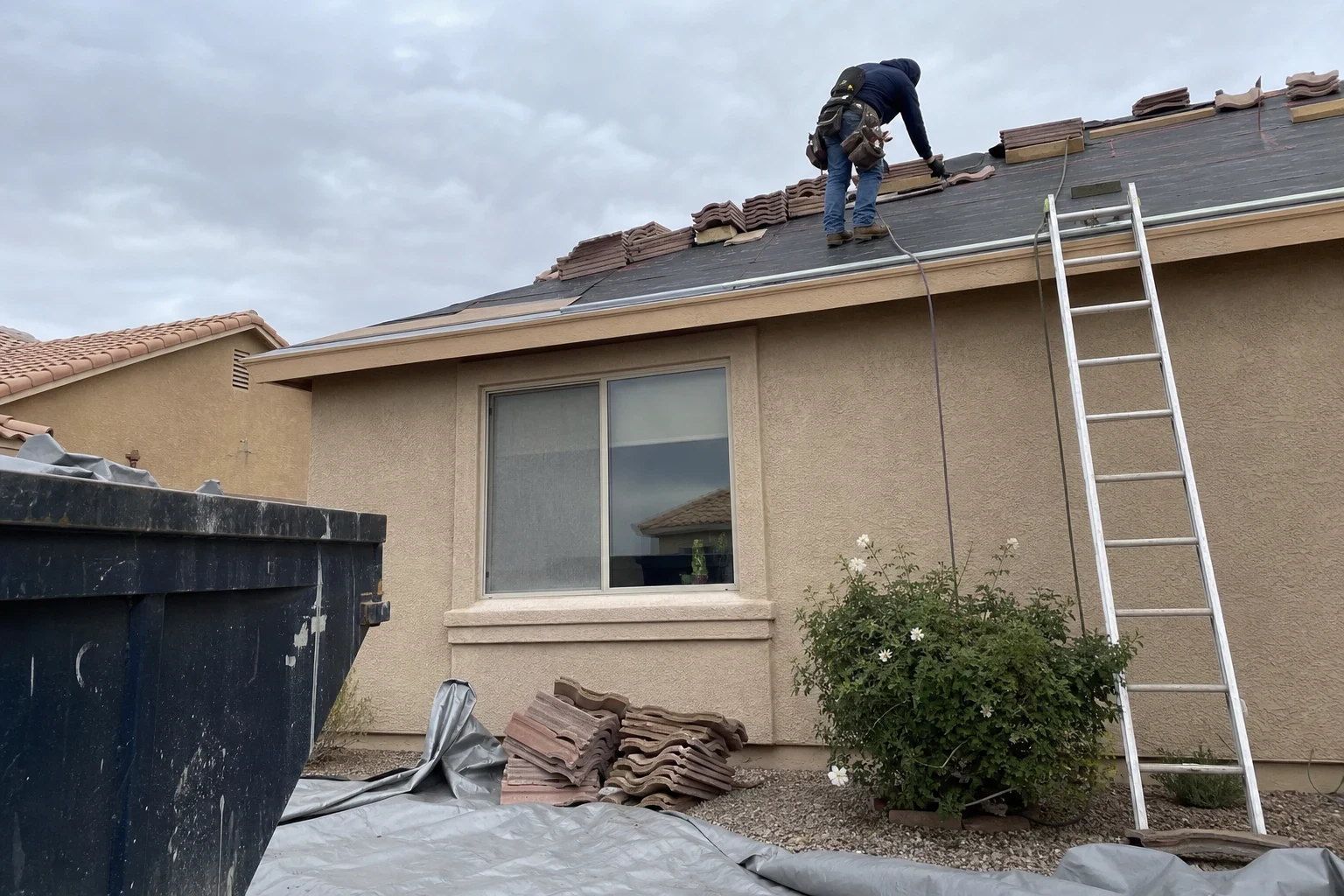
Storm repair on a West Valley home
In El Mirage, Surprise and Youngtown, most houses have concrete tile or asphalt shingle over plywood decking, often with a low-slope piece over a patio or addition. A monsoon microburst can shove tiles out of position, break the corners off brittle ones and tear shingle tabs that have sat in the sun for years. Hail doesn't fall often here, but when it does it bruises shingles and dents metal vents and flashing.
The most serious damage is often hidden. Under tile, the underlayment is what actually waterproofs the roof, and once a shifted tile leaves it exposed, Arizona sun wears it down fast. Water that slips through wets the attic insulation, and soaked insulation slows heat poorly. That is how storm damage becomes a comfort and cooling-cost issue, not only a leak.
A storm repair fits when the roof is sound overall and the damage stays in certain areas. If the underlayment turns out to be failing on most of the roof, we will say so directly and present roof replacement as an option, with our reasoning in writing.
What the repair includes
Full roof walk and photo record
We inspect every slope, not only the side where you noticed a problem. You get photos of each damaged area with a short note on what caused it, which also helps if you decide to file a claim.
Tile reset and replacement
Slipped tiles are reset and fastened. Cracked ones are replaced with matching profiles and colors wherever they can be sourced, and we check the battens and underlayment beneath before anything goes back down.
Shingle and ridge repair
Torn or creased shingles are replaced and sealed. Ridge caps that lifted in the wind are refastened so the ridge vent keeps letting hot air escape the attic.
Underlayment patches
Where wind or debris exposed the underlayment, we cut out the damaged area and lap new material in correctly so water sheds downhill, not under the layer above.
Vents, flashing and pipe boots
Dented vents, bent flashing and loose pipe boots are repaired or replaced. A crushed attic vent cuts airflow, so we treat these as part of keeping the attic cool, not as cosmetic touch-ups.
Gutter debris check
Monsoon storms pack gutters with grit and leaves. We clear what the storm left and note any sections that pulled loose; fuller work is covered on our Gutters page.
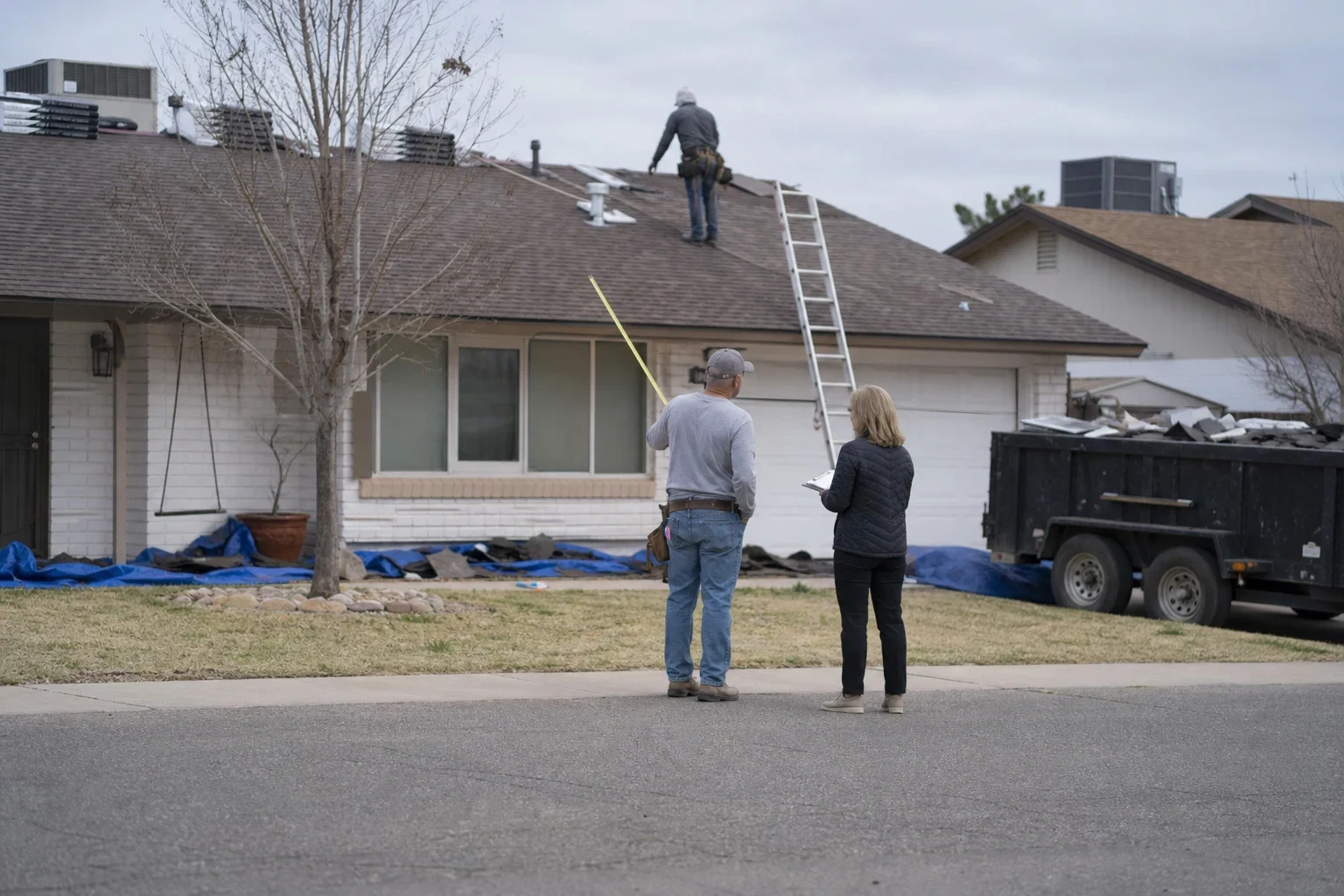
Signs a storm left damage behind
- Tiles out of line or on the ground
- A row that looks crooked from the street, or tile pieces in the yard or side yard, usually means wind got under the roof. Gaps expose underlayment to sun and rain.
- Debris landed on the roof
- Palm fronds, branches and patio furniture end up on roofs during microbursts. Anything that hit hard enough to land there can crack tile.
- Granules at the downspouts
- Small piles of gritty shingle granules after a storm point to hail or wind wear on asphalt shingles.
- A new ceiling stain or damp smell
- Even a faint ring on drywall means water reached the attic. Insulation above it may already be wet.
- Rooms running warmer than before
- If upstairs rooms feel hotter and the AC runs longer after a storm, a lifted vent cap or soaked insulation could be part of the reason.
How a storm repair visit runs
- 1
Walking the roof at a set time
We agree on a time that works for you, go over each slope of the roof and check the attic if we can get to it. We move carefully, because concrete tile breaks under a careless step.
- 2
Reviewing photos and findings
We go through the photos with you in person. The line-item estimate keeps storm damage apart from normal aging, so it's clear what you are paying to repair.
- 3
Insurance is your decision
When the damage might justify a claim, we explain what adjusters tend to check and give you our photos. Filing and the claim stay between you and your insurer, and we can be there for the adjuster's visit if you want.
- 4
The repair
We cover plants near the work, lean ladders softly on stucco and pavers and hand tile down rather than dropping it. Before leaving, we sweep the yard and driveway with a magnet to catch loose nails.
- 5
Before-and-after walk-through
We show you the completed repair next to the before photos and mention anything to keep an eye on during the next storm season.
What affects the price of storm repairs
A storm repair might mean a few tiles or entire sections of underlayment, so we don't set a price until we've been up on the roof. The written estimate breaks out each repair, making it simple to see what is needed now. When insurance is part of it, those line items also help you check the adjuster's scope.
- How widespread the damage is
- A single corner of lifted tile goes quickly. Damage across several slopes needs more labor and more material.
- Finding matching material
- Certain older concrete tile profiles are out of production. A match may require salvage tile or tile taken from a less visible slope, and that takes extra time.
- Condition below the surface
- When the underlayment or decking under the damage has broken down, it must be fixed before the surface is replaced, which expands the job.
- Slope and reach
- Two-story houses, steep roofs and roofs above pools or narrow side yards need more setup and extra care.
Storm damage questions we hear
- Do I have to file an insurance claim to get storm damage repaired?
- No. Many repairs are small enough that homeowners simply pay for them. We give you photos and an itemized estimate first, so you can weigh the repair cost against your deductible before deciding whether to contact your insurer.
- How soon after a monsoon storm should the roof be checked?
- Within a few weeks is sensible, ideally before the next storm moves through. Exposed underlayment breaks down fast in July and August sun, and a second round of rain on an already damaged roof is what usually reaches the ceiling.
- Can you match my existing tiles?
- Often, yes. We look for the same profile and color, and when a tile has been discontinued we can pull matching pieces from a hidden area and use the closest available tile there. We will show you samples before anything goes on.
- Will a storm repair lower my cooling bills?
- Only if the storm damaged something that affects heat, such as attic vents, ridge caps or insulation that got wet. In those cases, restoring airflow and a dry attic can help the house hold its temperature. If the damage was purely cosmetic, we will not promise savings.
- Should I climb up and look myself?
- We would rather you did not. Tile breaks underfoot and storm-loosened pieces can slide. Binoculars from the yard, a look in the attic with a flashlight and photos of any ceiling stains are a safer way to gather what we need.
- Do you work outside El Mirage?
- Yes. We repair storm damage across Youngtown, Surprise, Glendale, Peoria, Litchfield Park and Tolleson. The same monsoon patterns and roof types run through the whole area.
Have the storm damage looked at properly
We will walk the roof, photograph what the weather did and explain the repair in writing before any work begins. If a broader roof inspection makes more sense, we will say so.